
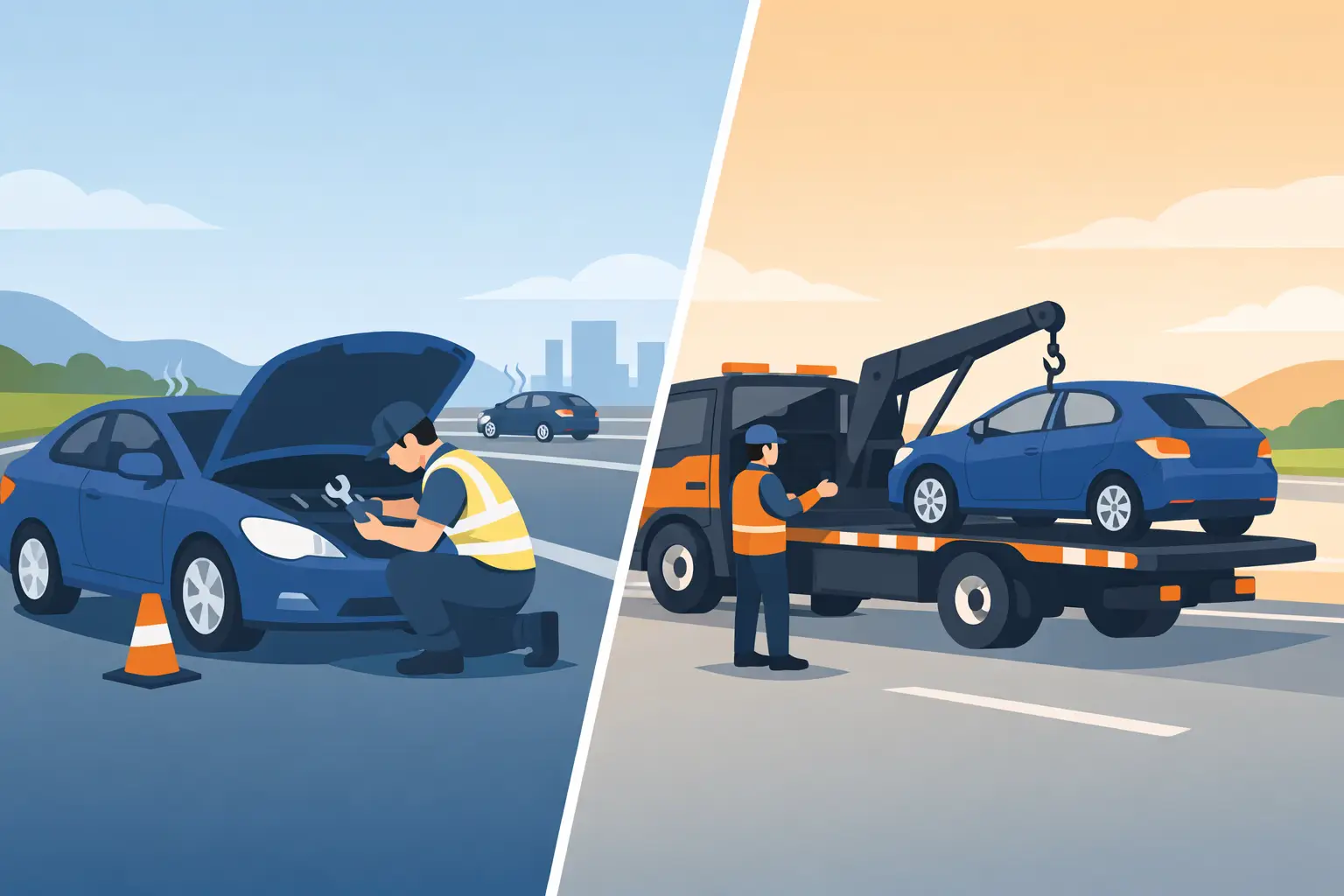
A flat battery in a quiet driveway is one thing. A warning light, smoke from the bonnet or a vehicle that has stopped in peak-hour traffic is another. When you are stranded, the roadside repair versus towing decision often comes down to one question: can the problem be fixed safely where the vehicle is, or does moving it create less risk?
For Melbourne drivers, there is no single answer. A simple battery jump may get you moving again, while continuing to drive with an overheating engine or damaged wheel can turn a manageable repair into major mechanical damage. The right choice protects you, other road users and your vehicle.
When roadside repair makes sense
Roadside assistance is a practical option when the fault is minor, the vehicle is parked in a safe location and there is a reasonable chance of getting it mobile without risking further damage. It can save time, avoid an unnecessary tow and get you back to your day quickly.
A flat battery is one of the most common examples. If the battery has discharged because a light was left on, a jump-start may be all that is needed. However, if the vehicle stalls again soon after starting, the battery or alternator may be failing. In that case, driving away and hoping for the best is not a plan. A tow to a mechanic is often the safer call.
A flat tyre can also be handled roadside if you have a usable spare, the right tools and a safe place to pull over. That does not mean changing a tyre is always sensible. On a busy road, narrow shoulder, freeway or poorly lit street, standing beside a vehicle is risky. Calling for help may be safer than attempting the change yourself.
Other faults that may suit roadside assistance include a locked-out vehicle, an empty fuel tank, a loose battery terminal or a minor issue that can be checked and resolved without putting anyone in danger. The key word is minor. Roadside help is not designed to make a seriously damaged or unreliable vehicle roadworthy.
A quick repair should not be a gamble
Before accepting a roadside fix, consider what caused the problem. A jump-start is helpful, but it does not repair a worn-out battery. Topping up coolant may help in an emergency, but it will not fix a leak, failed radiator fan or blown hose.
If the vehicle has been overheating, has lost oil pressure, is making loud mechanical noises or has a flashing warning light, stop driving. These signs can point to faults that become much more expensive when the engine keeps running. A short tow is generally cheaper than an engine replacement.
Roadside repair versus towing: when towing is the better option
Towing is the right choice when your car cannot be driven safely, when the cause of the breakdown is uncertain or when the roadside location is unsafe. It is not just for vehicles that will not start. It is also a way to prevent further damage and remove a hazard from the road.
After an accident, even a car that appears driveable may have hidden damage. Steering, suspension, tyres, brakes, wheel alignment and fluid lines can all be affected. A cracked bumper is easy to see. A bent suspension component behind the wheel is not. Towing the vehicle for an inspection is the cautious option.
The same applies when a tyre has blown out, a wheel is damaged, the car is leaking fluids or smoke is coming from the engine bay. Do not continue driving a vehicle with a suspected fuel leak, significant coolant leak or brake problem. Move away from traffic if it is safe to do so, switch off the engine and arrange recovery.
A tow is also useful when the repair destination is not close by. You may be able to restart the vehicle, but driving across Melbourne with an intermittent fault can leave you stranded again, possibly somewhere less safe. Transporting it directly to your mechanic gives you a clearer outcome.
Tilt-tray or flatbed towing can be particularly suitable for accident-damaged vehicles, low-clearance cars, prestige vehicles and vehicles with wheel or drivetrain issues. Keeping all four wheels off the road avoids adding kilometres or stress to a vehicle that should not be driven.
Your location changes the decision
Where you break down matters as much as what has gone wrong. A simple fault in your home driveway is very different from the same fault on the Western Ring Road, near a busy northern suburbs intersection or on a narrow road with limited visibility.
If you are stopped in a dangerous place, your first priority is getting yourself and your passengers to safety. Turn on hazard lights, move well away from traffic where possible and do not stand beside the vehicle on the traffic side. If the car is in a live lane, cannot be moved, or is creating an immediate danger, contact emergency services as required.
Do not open the bonnet near fast-moving traffic unless it is safe. Avoid trying to inspect the underside of the vehicle, changing a tyre close to traffic or pushing the car by yourself. The few minutes saved are not worth the risk.
In a safer location, such as a car park or quiet residential street, there is more room to assess the fault. Even then, avoid guessing. Warning lights, unusual smells, grinding sounds and fluid leaks are useful information for a roadside technician or tow operator.
What to tell the operator when you call
Clear details help the right assistance arrive without delay. Explain your exact location, nearby cross streets or landmarks, the vehicle make and model, and what the vehicle is doing. Mention whether it starts, whether the wheels turn freely, whether there has been an accident, and whether it is in a garage, underground car park or difficult-access location.
It also helps to say if the car is lowered, electric, all-wheel drive, loaded with work equipment or towing a trailer. These details can affect the safest towing method and the equipment required.
You do not need a technical diagnosis. A straightforward description is enough: “The temperature gauge is high and there is steam,” or “The front wheel is pointing the wrong way after hitting a kerb.” That information helps determine whether roadside help is appropriate or whether a tow truck should be sent.
The cost question: cheap now or cheaper overall?
It is understandable to prefer a roadside repair if it appears cheaper at first. Many motorists want to avoid a tow, especially when the car seems close to running. But the lowest immediate cost is not always the lowest total cost.
Driving an overheating car can damage the head gasket or engine. Driving with a brake issue can put people at risk. Driving after an accident can worsen damage and complicate repairs. In these situations, towing is not an extra expense. It is damage control.
On the other hand, arranging a tow for a discharged battery at home may not be necessary if a safe jump-start and battery check can solve the immediate problem. The sensible choice depends on the fault, the location, the condition of the vehicle and how far it needs to go.
A reputable operator should be able to discuss the situation in plain language and recommend a practical option. Towing VicState assists drivers across Melbourne and the northern suburbs with both roadside support and safe vehicle transport, so you can arrange the service that suits the actual problem rather than forcing one solution.
Make the next step the safe one
If you are unsure whether to repair or tow, treat uncertainty as a reason to be cautious. Do not keep restarting a car that is overheating, ignore a serious warning light or drive an accident-damaged vehicle because it still moves.
Park safely if you can, switch on your hazard lights, keep passengers away from traffic and get clear advice. A quick roadside fix is ideal when it is genuinely safe. When it is not, a professional tow gets your vehicle out of harm’s way and gives you the best chance of a straightforward repair.