
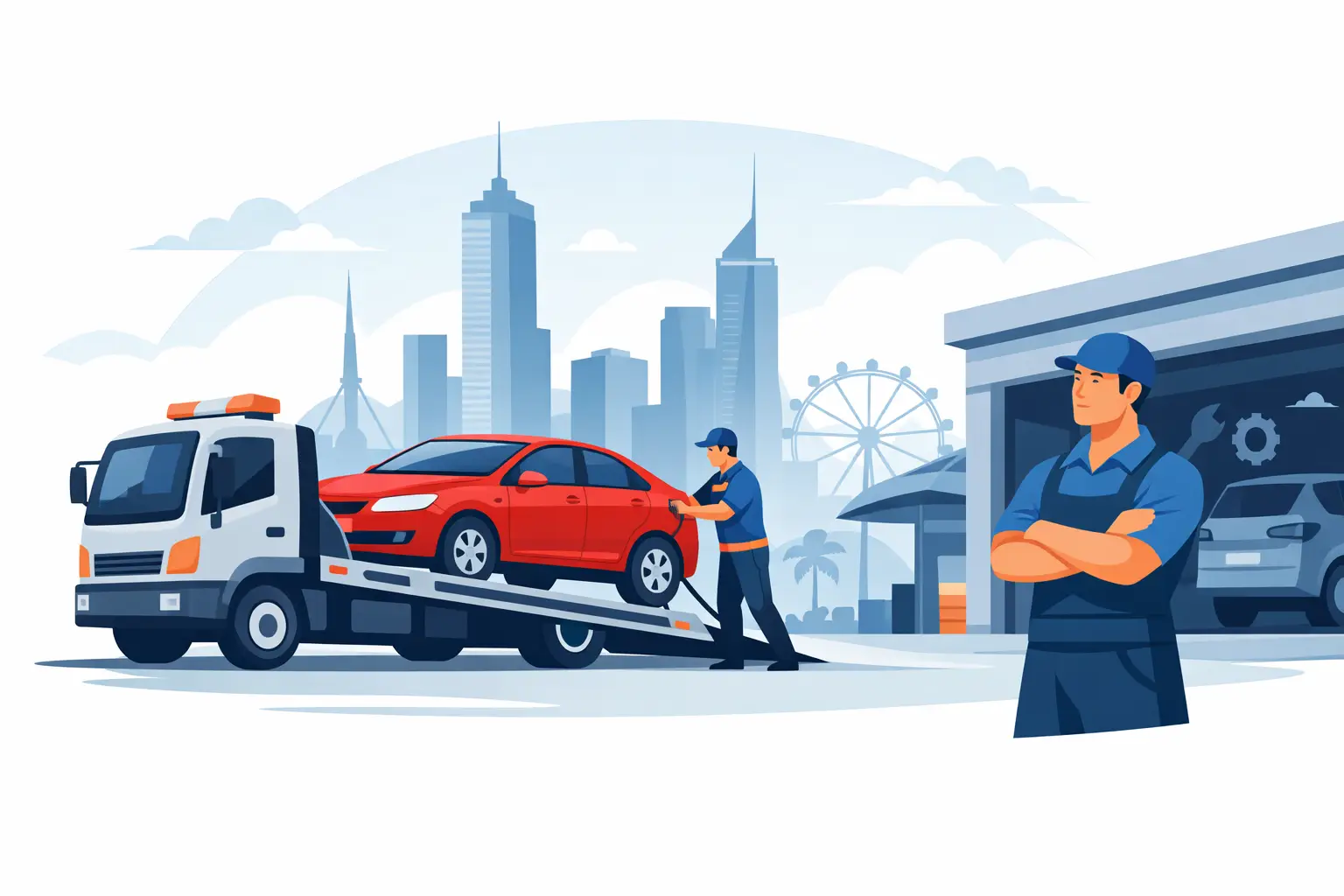
A car that will not start in the driveway is frustrating. A car that stops on the Tullamarine Freeway, outside a worksite in Campbellfield or in peak-hour traffic is another level of stress. When you need to tow car to mechanic Melbourne drivers trust, the priority is getting yourself out of danger first, then getting the vehicle delivered safely to the right workshop.
You do not need to diagnose the fault before arranging a tow. Whether the engine has overheated, the transmission is playing up, a warning light has appeared or the car has been damaged in an accident, a professional tow can get it off the road and to your chosen mechanic without adding to the problem.
When towing is the better call
Some faults can be sorted with roadside assistance. A flat battery may only need a jump-start. A flat tyre may be changed if you have a safe place to stop and a usable spare. But there are situations where driving on, even for a short distance, can turn a manageable repair into an expensive one.
If the temperature gauge is high, steam is coming from the bonnet, oil pressure warning lights are on, the engine is making harsh noises or the vehicle is leaking fluid, switch it off and arrange transport. The same applies if the steering, brakes, gearbox or wheels do not feel right. Continuing to drive can risk further damage and may put other road users at risk.
After an accident, the vehicle may look driveable but have hidden damage to the suspension, steering, cooling system or wheel alignment. A tow to a mechanic, panel beater or insurer-approved repairer is often the safer choice. Do not assume a car is roadworthy simply because the engine still starts.
What to do before the tow truck arrives
If you are stopped on a busy road, move as far from traffic as you safely can. Put on your hazard lights and, where safe, stand well away from moving vehicles. On a freeway or a road with fast traffic, do not attempt repairs beside the vehicle. Your safety matters more than saving a few minutes.
When you call to arrange towing, have the vehicle registration, make and model ready. Explain where the car is, where it needs to go and what has happened. Let the towing operator know if the car cannot roll, is locked in park, has a flat tyre, has low ground clearance or has been involved in a collision. Those details help ensure the right truck and equipment are sent.
It also helps to tell the mechanic the vehicle is coming. Confirm their address, opening hours and whether they can accept a drop-off after hours. Many workshops have a key-drop box or a secure arrangement for vehicles delivered outside business hours, but it is best to check rather than arrive at a closed gate with nowhere suitable to leave the car.
Before the truck arrives, take your valuables out of the cabin and boot. Remove toll tags if you prefer, keep your keys handy and take a few photos of the vehicle, especially after an accident. Photos provide a clear record of its condition before transport and can be useful for insurance or repair discussions.
Choosing the right way to tow a car to a mechanic in Melbourne
Not every vehicle should be towed the same way. The right method depends on the condition of the car, its drivetrain and the damage involved.
A tilt-tray or flatbed tow is often the safest option for modern vehicles, prestige cars, lowered cars, EVs and cars with accident damage. The vehicle is loaded fully onto the tray, keeping all four wheels off the road. This avoids unnecessary strain on the drivetrain and is particularly useful when a car cannot be started or moved normally.
A standard tow may suit certain vehicles and straightforward local transfers, but the towing operator needs to know whether your car is front-wheel drive, rear-wheel drive or all-wheel drive. All-wheel-drive vehicles generally need special care because towing them incorrectly can damage the driveline. If you are not sure, say so when booking. The operator can work out the appropriate method from the vehicle details.
For a damaged ute, van or work vehicle, access can matter as much as the vehicle itself. A tight apartment car park, underground garage, narrow street or construction site may affect the truck needed and the safest loading approach. Give an accurate location and mention height restrictions, gates or difficult access early.
Give your mechanic the details that matter
A tow gets the car to the workshop. Clear information can help the mechanic start work faster once it arrives.
Write down when the issue started, any warning lights that appeared, unusual sounds or smells, and what happened immediately before the car stopped. For example, a vehicle that lost power after overheating needs a different inspection from one that would not start after sitting overnight. If you recently had repairs completed, mention that too.
Avoid trying to clear dashboard warnings by disconnecting the battery unless a mechanic has told you to do so. Fault codes can help identify intermittent electrical, ignition and engine problems. Keeping the vehicle as it failed may give the workshop a better chance of finding the cause.
If the car is being towed after a collision, tell the repairer whether airbags deployed, whether the wheels are pointing straight and whether any fluid is leaking. Even small impacts can affect components that are not obvious from the outside.
Towing to a mechanic after hours
Breakdowns do not wait until the workshop opens. A late-night failure, early morning airport run or weekend accident can leave you needing a tow before your mechanic is available.
The practical approach is to arrange secure transport and confirm an after-hours delivery plan. Some mechanics will allow a tow truck to leave the vehicle in a designated spot, while others may require it to be taken to a holding location until they reopen. Never ask for a car to be left blocking a driveway, footpath, gate or shared access area.
If you cannot contact your preferred mechanic, you can still have the car moved to a safe location and organise the workshop delivery later. It may cost more than a direct trip, so ask about the options and get a clear quote before the job begins. In an urgent situation, safe recovery should come before convenience.
What affects the cost of towing in Melbourne?
Towing prices vary because no two jobs are exactly alike. Distance is one factor, but vehicle condition, loading difficulty, time of day, location, accident recovery requirements and the equipment needed can also affect the quote.
A car parked in a clear driveway and able to roll is generally simpler to move than a vehicle with locked wheels on a busy arterial road. A tilt-tray job for a damaged SUV or EV may need more specialised handling than a short tow for a small hatchback. The best way to avoid surprises is to provide accurate details and ask what the quoted service includes.
Be wary of anyone who cannot explain the process or gives a vague price without asking where the vehicle is going. A dependable operator should be clear about the pickup point, destination, type of tow and any likely extra requirements before loading the car.
Local help when your car cannot make it to the workshop
Melbourne traffic, long commutes and unpredictable mechanical faults mean a breakdown can happen anywhere. Whether you are in Broadmeadows, Epping, Craigieburn, Coburg, Preston, Sunshine, St Albans or nearby, the goal is the same: remove the vehicle safely, protect it during transport and get it to the mechanic with as little disruption as possible.
Towing VicState provides practical vehicle transport for drivers who need a working solution without delay. Share your location, vehicle details and mechanic’s address, then the right towing arrangement can be made for the job.
If your car is stopped now, do not keep trying to drive it when something feels wrong. Move to a safe position where possible, keep clear of traffic and arrange a tow that gives your mechanic the best chance to assess and repair it properly.