
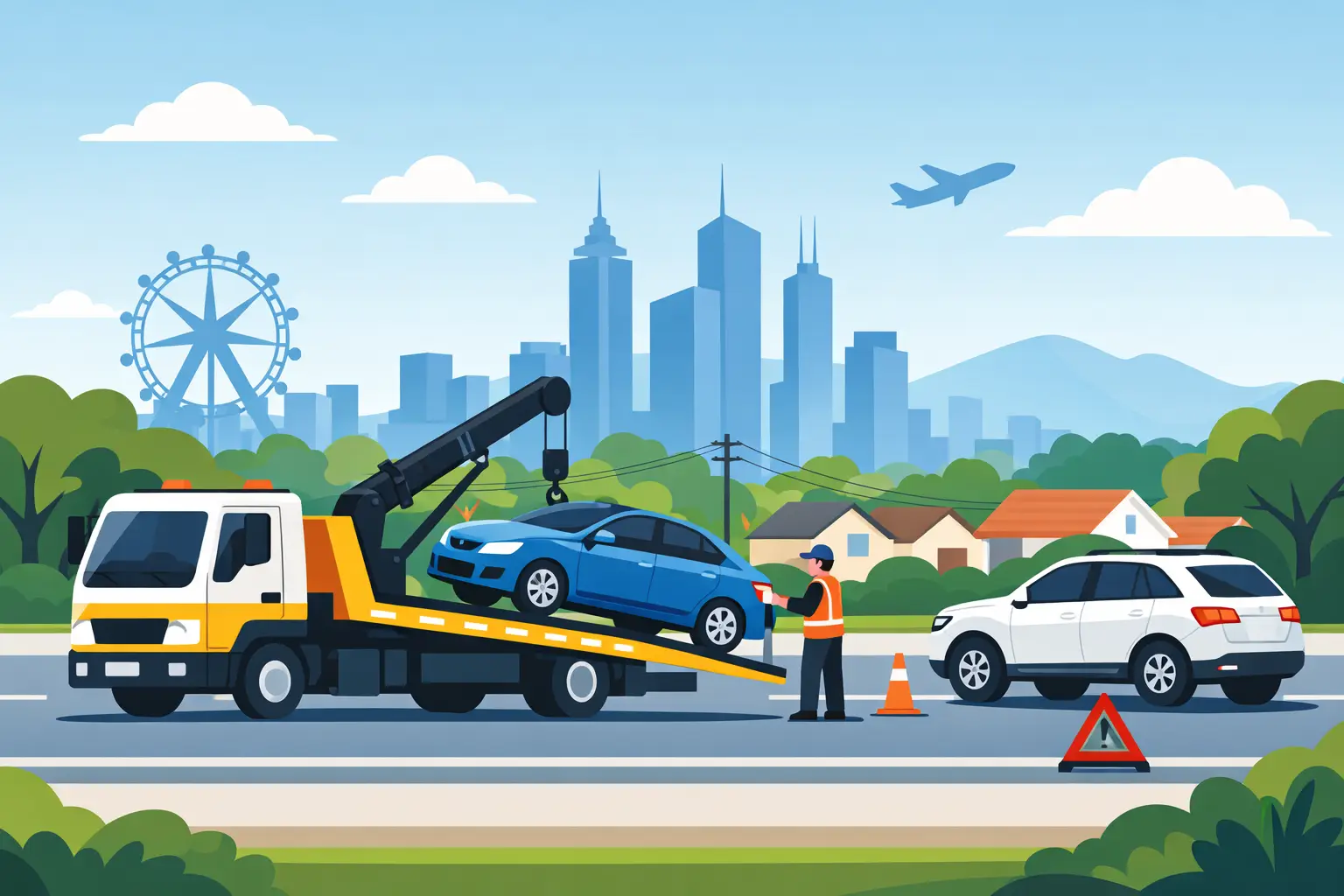
A stalled car on the Hume, a flat battery outside a Preston shop, or an accident near Craigieburn can turn a normal day into a stressful one quickly. This Melbourne northern suburbs towing guide explains what to do first, what information a tow operator needs, and how to arrange the right help without making a difficult situation harder.
First Steps in Melbourne Northern Suburbs Towing
Your safety comes before the vehicle. If the car is still moving, indicate early and pull into the safest practical location. A quiet side street, service lane or car park is usually better than stopping on a busy arterial road. Switch on your hazard lights, apply the handbrake and keep well clear of passing traffic.
If you have stopped on a freeway, major road or blind corner, do not attempt repairs beside live traffic. Move yourself and passengers to a safer position if it is safe to do so. In a serious crash, where anyone is injured, traffic is blocked or there is an immediate danger, call 000 first. A tow truck can recover the vehicle, but emergency services manage the scene where people are at risk.
Once everyone is safe, take a breath and check the basics. Is there a flat tyre, a dead battery, overheating, a warning light, smoke, a fuel issue or visible collision damage? You do not need to diagnose the fault perfectly. A simple description helps the towing operator send the suitable truck and allow for the right equipment.
Know When Roadside Help Is Enough
Not every immobilised vehicle needs a tow. A flat battery may be solved with a jump-start, while a locked car may only require access assistance. If you have a spare wheel, a safe location and no damage to the tyre or wheel, a tyre change may get you moving again.
There are times when towing is the sensible option, even if the car starts. Do not keep driving a vehicle that has overheated, lost oil pressure, has steering or brake issues, or has been damaged in a collision. Continuing can cause further mechanical damage and may put you or other road users at risk.
For commuters and tradespeople, the decision often comes down to downtime. Waiting to see whether an unreliable vehicle will make it home can cost more than arranging transport to a mechanic. A local operator can tow your car, ute or van to your preferred workshop, home or another agreed destination.
What to Tell the Tow Truck Operator
Clear information speeds up the response. Start with your exact location, including the suburb, nearest cross street, freeway exit, landmark or business name. Northern Melbourne covers a wide area, and an address is more useful than saying you are somewhere near Epping or Broadmeadows.
Explain the vehicle make, model and registration, along with its condition. Let the operator know whether it rolls freely, has a flat tyre, is locked, has collision damage, sits in a low car park, or is loaded with tools or goods. These details matter because a standard tow may suit one job, while another needs a tilt-tray or flatbed.
Also confirm where the vehicle needs to go. This could be a local mechanic, panel beater, dealership, home address or secure storage location. If you need to collect belongings from the vehicle first, say so before loading begins. Keep your mobile switched on in case the driver needs clarification about access or the pickup point.
Choosing the Right Towing Option
A standard tow is often suitable for straightforward breakdowns where the vehicle can be moved safely and access is simple. It is a practical choice for many local trips from suburbs such as Coburg, Campbellfield, Sunshine, St Albans and surrounding areas.
Tilt-tray and flatbed towing are often the better choice for accident-damaged vehicles, prestige cars, lowered vehicles, all-wheel drives, vehicles with drivetrain faults, or cars that cannot roll. The vehicle is loaded onto the tray rather than towed with wheels on the road. This can provide extra protection and is particularly useful when the condition of the car is uncertain.
There is a trade-off. The safest equipment for a damaged or specialised vehicle may cost more than a basic tow, and tight access can affect what truck can attend. Giving accurate details at the start helps avoid delays, incorrect equipment or changes at the roadside.
Accident Recovery Needs More Care
After an accident, photograph the scene and vehicle damage if it is safe to do so. Exchange details with other drivers where required, and do not admit fault at the roadside. If police attendance is needed, follow their directions before arranging removal.
Tell the tow operator if airbags have deployed, wheels are damaged, fluids are leaking or the vehicle is obstructing traffic. A damaged car can have sharp panels, loose parts and compromised steering, so it should not be pushed or driven unless it is clearly safe. Recovery is about getting the vehicle away safely, not simply getting it out of sight.
Local Conditions That Can Affect Pickup Times
Melbourne’s northern suburbs include busy commuter routes, industrial estates, shopping precincts and expanding residential areas. Traffic around the Ring Road, Hume Freeway, Tullamarine Freeway and major local roads can affect access, especially during peak periods or after a crash.
Weather matters too. Heavy rain can make a shoulder unsafe, hide potholes and complicate loading. On hot days, overheating and battery problems are common. In winter, early darkness can make it harder for other drivers to see a stationary car. Keep hazards on and, where safe, leave enough space for the tow truck to work.
If your vehicle is in an underground car park, behind a locked gate or in a narrow driveway, mention it when booking. Height restrictions and tight turning areas may require a different approach. A little detail before dispatch can save a second trip.
Prepare Before You Need a Tow
A roadside problem is easier to manage when you already have a few essentials in the car. Keep your licence, registration and insurer details accessible, along with a charged mobile, torch, basic first-aid kit and high-visibility item. If you drive for work, make sure your employer or fleet contact details are available too.
It also helps to decide where you would prefer the vehicle taken if it cannot be repaired. Your usual mechanic may be best during business hours, while home or secure storage may make more sense late at night. If you have an unwanted, non-running or damaged vehicle that is not worth repairing, ask about vehicle removal rather than paying to keep it parked.
For planned moves, such as transporting an unregistered car, a project vehicle or a car bought privately, book ahead where possible. Planned towing gives you time to confirm access, pickup timing and the best transport method. It is usually less stressful than trying to organise a move on the day.
Getting a Clear Towing Quote
Price should be clear before the job begins. A quote may depend on pickup and drop-off locations, vehicle type, condition, time of day, required equipment and recovery difficulty. A vehicle parked safely on a suburban street is a different job from a collision recovery in traffic or a car stuck in a difficult access point.
Ask what the quoted service includes and whether any extra circumstances could change the cost. Honest information from both sides is the best way to avoid surprises. Be cautious of anyone who cannot explain the service, pressures you to make a fast decision, or will not confirm where your vehicle is being taken.
Towing VicState provides practical local assistance for breakdowns, accident recovery, vehicle transport and unwanted-car removal across Melbourne’s northern suburbs. When you call, give the location, vehicle details and destination, then let the operator organise the safest option for the job.
If your car stops today, focus on getting out of danger first. The rest is a straightforward conversation: where you are, what has happened, and where the vehicle needs to go.