
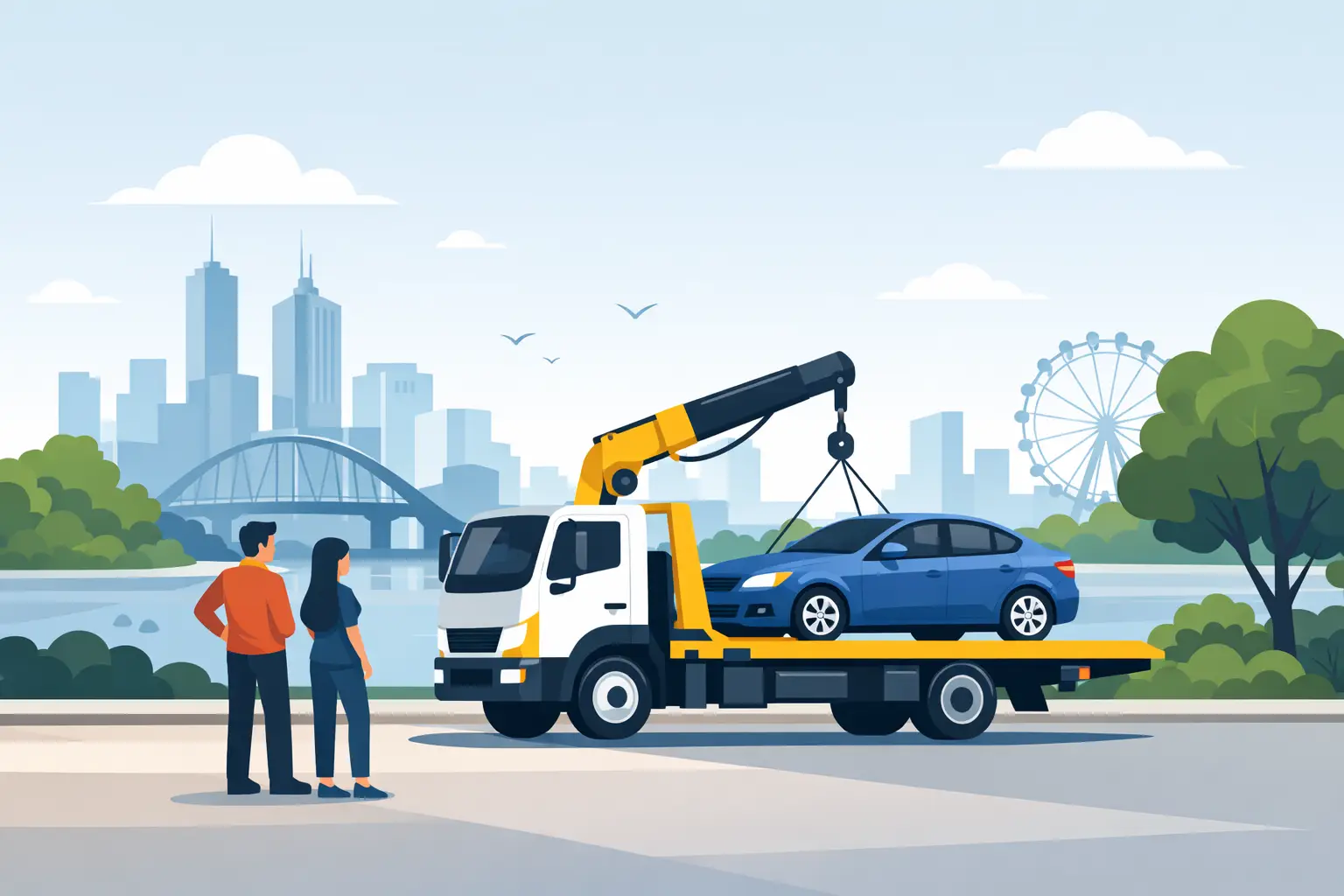
A car that will not start in a supermarket car park, a ute stopped on the way to a job, or a vehicle damaged in a crash all create the same immediate question: how do you move it safely? Tow truck hire Melbourne gives drivers a practical way to get their vehicle off the road, out of harm’s way and to the right destination without making a difficult situation worse.
For motorists across Melbourne’s northern suburbs, the priority is usually simple. You need a local tow truck, clear communication and careful handling of your car, 4WD, van or ute. Whether the job is urgent or planned, the right towing service should make the next step easy.
When do you need tow truck hire in Melbourne?
Towing is not only for major accidents. Many call-outs begin with an ordinary mechanical problem that leaves a vehicle unable to move. A flat battery may be solved with roadside assistance, but a serious electrical fault, overheating issue, flat tyre without a usable spare, transmission failure or damaged suspension may mean the vehicle needs transport instead.
Accident recovery is another common reason to arrange a tow. Even if a car appears driveable after a collision, it may have hidden damage, leaking fluids, loose panels or steering problems. Driving it can create another safety risk or cause more damage. A tow truck can move the vehicle to a repairer, home, insurer-approved location or another safe address.
Planned vehicle transport also has its place. You may have bought an unregistered car, need to move a project vehicle, want to take a non-running car to a mechanic, or need to relocate a vehicle between suburbs. In these cases, booking ahead can give you more flexibility around timing and pickup access.
Choosing the right tow truck for the job
Not every tow is the same. The size, condition and location of the vehicle affect the equipment needed. Providing accurate details from the start helps ensure the right truck is sent and avoids delays on the day.
A standard tow may suit many everyday vehicles that can roll freely and have no major damage. For low-clearance cars, prestige vehicles, accident-damaged cars, vehicles with locked wheels or those that should not be pulled from one end, a tilt tray or flatbed tow is often the safer choice. The vehicle is loaded onto the tray rather than travelling with wheels on the road.
This matters for more than appearances. Correct loading protects the drivetrain, tyres, bodywork and undercarriage. It is particularly relevant for all-wheel-drive vehicles, cars with transmission faults and vehicles that have been sitting for some time. A good operator will assess what is needed rather than treating every job as identical.
Access can also change the plan. A car in a tight driveway, underground car park, narrow street or busy roadside needs a different approach from one parked in an open lot. Mentioning these conditions when requesting a quote helps the towing team prepare properly.
What to tell the towing operator
When you are already delayed or stressed, you do not need a complicated booking process. A few useful details will help organise the tow quickly and provide a more accurate price. Have the vehicle make, model and registration ready, along with its pickup location and destination.
It also helps to explain why the vehicle cannot be driven. Say whether it starts, rolls, has keys available, has been in an accident, has flat tyres or has damage underneath. If you are on a roadside, give the nearest cross street, landmark or direction of travel. For freeway or major-road breakdowns, your safety comes first, so move away from traffic where possible and follow any instructions from emergency services or road authorities.
For a smooth collection, let the operator know about obstacles such as height restrictions, gates, steep driveways or limited turning space. These details are not minor. They can determine whether a particular truck can safely reach the vehicle.
Safety comes before speed
Fast assistance matters when you are stranded, but rushing the job should never mean cutting corners. Keep clear of moving traffic, turn on your hazard lights if it is safe to do so, and avoid standing between your vehicle and the road. If you are in an unsafe position after an accident, contact emergency services first.
Do not attempt to push a broken-down vehicle through traffic or attach improvised ropes to another car. It can be dangerous for everyone nearby and may cause expensive damage. Professional towing equipment is designed to secure a vehicle correctly, including vehicles that cannot be started or moved under their own power.
Before the truck arrives, remove valuable items from the cabin if you can do so safely. Take photos of the vehicle’s condition after an accident or if you are arranging a long-distance move. Keep your keys, licence and any insurance or repair information with you unless the towing operator asks otherwise.
Local towing for northern Melbourne drivers
A local operator understands that a breakdown in Campbellfield, Broadmeadows, Epping, Craigieburn, Tullamarine, Coburg, Preston, Sunshine or St Albans can involve very different traffic conditions and access issues. Peak-hour congestion, industrial areas, airport routes and busy suburban roads all affect how a tow is arranged.
Local coverage is useful because you are not dealing with a distant dispatch service trying to work out where you are. You can explain the situation directly and arrange transport to a nearby mechanic, smash repairer, home or workplace. This is especially valuable for tradespeople, rideshare drivers and small businesses whose vehicle is part of their daily income.
Towing VicState provides practical towing and vehicle transport for urgent and planned jobs across Melbourne and surrounding northern suburbs. The focus is on safe handling, dependable service and straightforward quotes, whether you need an emergency tow at night or a booked tilt-tray transport during the day.
Understanding towing quotes
The cheapest advertised price is not always the final cost, so ask what the quote covers before confirming a booking. The distance between pickup and drop-off is important, but so are the vehicle type, time of day, access conditions, recovery requirements and equipment needed.
A straightforward tow from a safe, accessible street to a nearby workshop may be simple to price. A damaged vehicle in an awkward position, a recovery from a difficult location or transport outside normal conditions may require more work. Clear information early on gives the operator the best chance to quote fairly and send suitable equipment.
If your car is being taken to a repairer, check that the workshop can receive it before arranging the drop-off. After-hours collections can be useful, but some destinations may not accept vehicles outside business hours. In that case, home delivery or secure temporary placement may be the better option.
When removal may be better than repair
Sometimes towing to a mechanic is not the most sensible next move. If repair costs outweigh the value of an old, badly damaged or unregistered vehicle, cash-for-cars or scrap-car removal may be worth considering. This can save you the cost and effort of storing a vehicle that is unlikely to return to the road.
The right choice depends on the car’s condition, repair estimate and sentimental or practical value. If you are unsure, arrange a towing quote first and consider your options once the vehicle is safely off the road.
When your vehicle cannot go any further, do not take risks trying to force it home. Give the towing operator clear details, choose the right transport option and get your car to a safe place where the next decision can be made calmly.